Aquasonic Black Series vs Philips Sonicare 4100 Power
We compare the Aquasonic Black Series and the Philips Sonicare 4100 Power across every dimension that matters - our scores, the key specs, and how each performs on the things you will actually notice day to day.

At a glance
| Aquasonic Black Series | Philips Sonicare 4100 Power | |
|---|---|---|
| Our score | 8.7/10 | 6.7/10 |
| Best for | More thorough daily brushing with a timer | More thorough daily brushing with a timer and pressure sensor to protect your gums |
| Not ideal for | Anyone happy with a manual brush, or wanting the absolute cheapest option | Anyone happy with a manual brush, or wanting the absolute cheapest option |
| Brand | Aquasonic | Philips |
Cleaning Action and Modes
Aquasonic Black Series
The electric toothbrush is built around a sonic motor and includes four separate cleaning modes. Each mode is designed to vary the cleaning routine while the brush maintains a consistent vibration-driven action throughout the session. In typical use, a mode is selected and the built-in two-minute timer manages the duration automatically, reducing the need for manual timing. The flexibility across different day-to-day needs is the key advantage, but it also means mode choice may require a brief adjustment period to match preferred feel. If modes are switched frequently, that routine may take longer to settle.
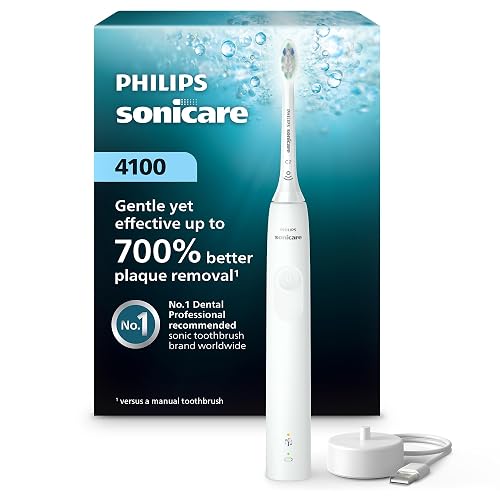
Philips Sonicare 4100 Power
This electric toothbrush is built around a sonic cleaning action for everyday brushing, using vibrations to support effective plaque removal along the gumline. The brush includes a pressure sensor designed to help reduce overly hard scrubbing, which can be uncomfortable for gums. During brushing, the sonic action works as the brush head is guided across teeth at the gumline, covering the front, back, and chewing surfaces. Results can vary depending on technique, plaque build-up, and consistency.
Battery Life and Charging
Aquasonic Black Series
How long the Aquasonic lasts between charges depends on how often it is used and which of its four cleaning modes is selected, because the brush runs for a fixed session length each time. Each session uses a consistent 2-minute timer, so charging needs vary with daily habits. The toothbrush supports wireless charging via a charging base rather than a wired connector. For charging, it is placed on the wireless charger and left until ready. If used frequently, it may need more regular top-ups than for occasional use.
Philips Sonicare 4100 Power
Battery life and charging determine how practical the Philips is for day-to-day use, especially if it is used every morning and evening. As a rechargeable electric toothbrush, it requires periodic charging. The battery management likely supports regular home routines, yet travel days can still require planning if charging access is limited. Charging steps are straightforward: place the handle on its charger, wait until it completes, then store it dry. How long charging takes is not stated, so the charging routine may need to be confirmed against your own usage pattern.
Pressure Sensor and Timer
Aquasonic Black Series
Once in use, the electric toothbrush relies on a smart 2-minute timer to guide each cleaning session, helping keep brushing consistent when a user is busy or distracted. The timer supports a steady routine, encouraging time to be divided across the mouth rather than rushing at the end. While a timed session can support good habits, it cannot replace correct brushing technique, as timing does not detect plaque buildup. Users should rely on gentle contact and follow the session guidance.
Philips Sonicare 4100 Power
Regularly, the electric toothbrush is designed to help users brush more gently and consistently, thanks to a pressure sensor in the handle. When the bristles are pressed too hard, the sensor can cue the user to reduce force, which may help limit over-brushing on enamel and gums. The handle also includes a timer, which supports routine coverage by signaling when brushing sessions should finish. Users can follow the cues during each stroke, then reassess technique if they still see continued high pressure. Still, the exact alert style is not stated, so responses may vary by person.
Brush Heads and Running Costs
Aquasonic Black Series
Brush heads are a key ongoing cost for this electric toothbrush setup. The kit includes 8 brush heads, which require replacement as the bristles wear down. Sonic brushing relies on consistent bristle condition for effective cleaning, so head swaps are needed when the bristles become less soft, fray starts, or cleaning feels less thorough. The wireless charging and the 4 cleaning modes do not change the need to replace brush heads over time. Buying extra heads in advance can reduce repeat purchases.
Philips Sonicare 4100 Power
Pressure-sensor cues can help users brush with less force, but ongoing costs depend on the brush heads. The Philips model uses replaceable heads to deliver the cleaning action, so replacement schedules affect running costs. Each head must be swapped when cleaning performance drops or the bristles wear. Users will need to budget for periodic refills, and availability can vary by retailer. Those who replace heads regularly may find costs steady, while delaying replacement can lead to less effective brushing and faster wear of gums and teeth. Buying multi-packs may lower the per-head cost, but specific prices are not provided.
Smart Features and Travel
Aquasonic Black Series
What makes the Aquasonic Black Series easier to live with day to day is its smart timing and travel setup. It includes a 2-minute timer to help keep each brushing session within the intended duration, then it can reduce guesswork when switching between the four cleaning modes. For trips, the package includes a travel case, so the handle and brush head can be kept together during packing. Wireless charging is also part of the design, so there is less need for frequent plug access, although correct placement on the charger is still required for charging to work as intended.
Philips Sonicare 4100 Power
During smart features and travel support, an electric toothbrush can fit more easily into daily routines, but the experience depends on what is included in the box and how the device is carried. When travelling, a rechargeable electric toothbrush typically needs safe storage, such as a hard case, to protect the head and reduce mess. If accessories, travel cases, or chargers are missing (not stated), planning ahead is important for smooth use.
Who Is This Electric Toothbrush For?
Aquasonic Black Series
The Aquasonic is for people who want a simple brushing routine, supported by a 2-minute timer designed to cover a full session. It suits those who prefer selecting between four cleaning modes, rather than using a single fixed programme. The package includes 8 brush heads and a travel case, making it suitable for households that switch heads regularly and for travellers who want basic portability. It is less tailored to people who want fewer parts to manage, or who expect more advanced dental coaching beyond the timer (details are not stated).
Philips Sonicare 4100 Power
The electric toothbrush is for adults who want a simple, rechargeable sonic toothbrush with a built-in pressure sensor to help reduce overly hard brushing. It suits people who prefer straightforward controls and want pressure feedback while brushing, particularly if they tend to press too firmly. The pressure sensor can also support better brushing technique during learning, by flagging poor brushing habits early. It may not suit buyers who expect advanced smart modes or detailed customisation.
Aquasonic Black Series: pros
- Sonic cleaning action
- 4 cleaning modes for different needs
- Built-in timer ensures a full two minutes
- 8 brush heads included
- Travel case included
Cons
- Replacement brush heads are an ongoing cost
- More expensive upfront than a manual toothbrush
- Needs recharging (though many last weeks per charge)
Philips Sonicare 4100 Power: pros
- Sonic cleaning action
- Pressure sensor protects gums from over-brushing
- Removes more plaque than a manual brush for most people
Cons
- Replacement brush heads are an ongoing cost
- More expensive upfront than a manual toothbrush
- Needs recharging (though many last weeks per charge)
Our verdict
Our pick is the Aquasonic Black Series (our score 8.7/10) - A practical electric toothbrush (sonic, 4 cleaning modes) that helps you brush more effectively than a manual brush. The Philips Sonicare 4100 Power is still worth it if it is cheaper when you check, or if it better matches your specific needs.